If you’re heading to Jaipur and don’t stop by the Hawa Mahal, did you even go? This crown-shaped palace, nicknamed the “Palace of Winds,” is one of the most iconic stops in all of Rajasthan—and not just for the Gram. With its jaw-dropping honeycomb façade and over 900 tiny windows, Hawa Mahal is where architecture, history, and serious desert breeze vibes collide.
So, What Is Hawa Mahal?
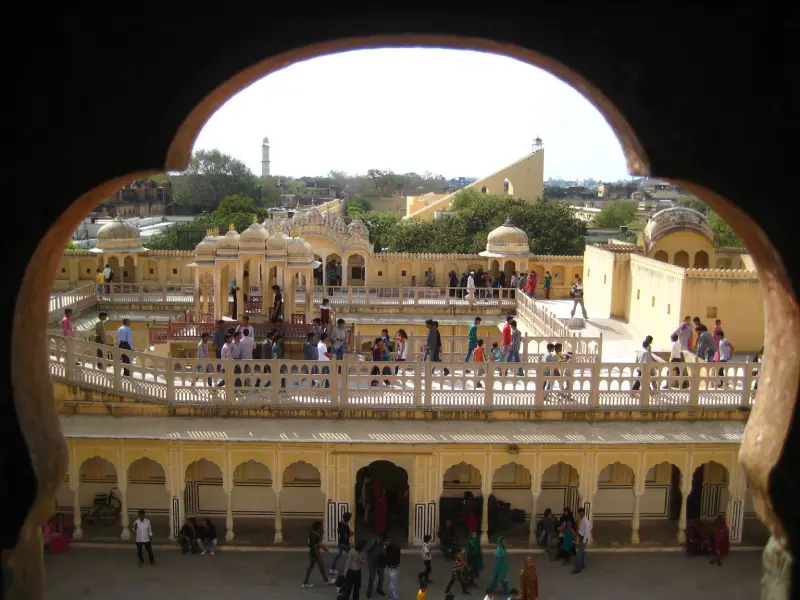
By Sameer Goyal – https://www.flickr.com/photos/sameergoyal/11594495923/, CC BY-SA 2.0, Link
Hawa Mahal is a five-story stunner made of red and pink sandstone, built way back in 1799 by Maharaja Sawai Pratap Singh. Inspired by the unique design of Khetri Mahal, this palace was created as an extension of Jaipur’s massive City Palace, especially for the royal women.
The twist? It’s built so the queens and princesses could peek out at the street festivals and daily hustle-bustle without ever being seen. Those 953 intricately carved jharokhas (mini windows) worked like a one-way mirror—and also let in tons of airflow. So basically, it was an ancient AC system before central air was even a thing.
Why Is Jaipur Called the Pink City?
Jaipur earned the nickname “The Pink City” in 1876 when it was painted pink to welcome the Prince of Wales (later King Edward VII). That pink? It wasn’t just for show. It symbolized hospitality. Hawa Mahal, with its pink-washed façade, is the poster child of this tradition. The color, made from a blend of calcium oxide and red sandstone, gives the whole city a warm, inviting glow—especially around sunset.
Inside the Architecture
- Shape: Five-tier pyramidal structure, about 50 feet tall
- Style: A perfect fusion of Hindu Rajput vibes (lotus motifs, domed canopies) and Mughal flair (arches and filigree work)
- Windows: 953 jharokhas with detailed latticework
- Interior: Marble floors, fountains in the chambers, and open-air breezeways designed for max cool-down
- Fun bit: The top two floors are only accessible by ramps—no stairs!
Despite how intricate the front is, the back side is pretty minimal and plain. But that only adds to the surprise once you walk through the palace gates.
Don’t Miss This
- Sunrise visit: That golden light hits just right
- Insta spots: Shoot from across the street for that full façade shot
- Evening glow: The palace is beautifully lit at night
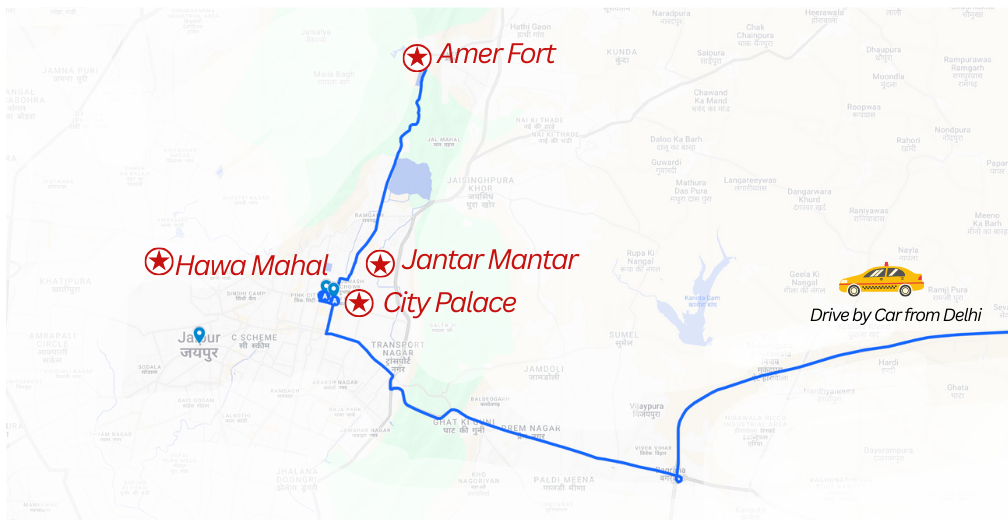
- The view from the top floors: You’ll see the City Palace, Jantar Mantar, and the bustling bazaars below
Nearby Must-Sees
Make it a Jaipur day trip and add these to your list:
- Amer Fort – grand AF and seriously cinematic
- Nahargarh Fort – killer sunset views over the city
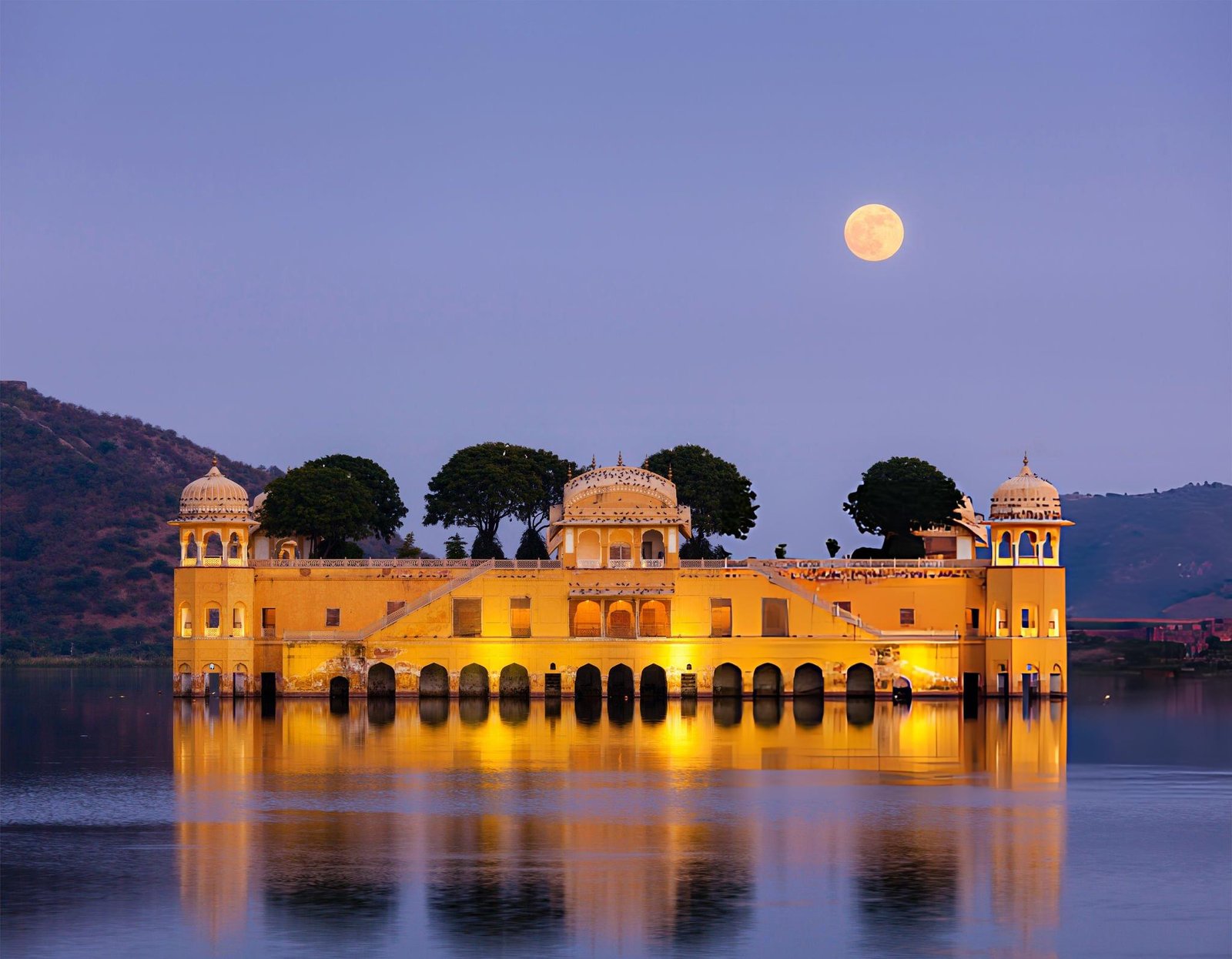
- Jal Mahal – a palace floating in the middle of a lake? Yes, please.
- Albert Hall Museum – for art and architecture buffs
- City Palace – where royal life still flexes
How to Reach Hawa Mahal
By Air: Fly into Jaipur International Airport (JAI). From there, it’s about a 30-minute cab ride to the Hawa Mahal.
By Train: Jaipur Junction is the main station. Grab a tuk-tuk or cab from the station—it’s just a 15-minute ride.
By Road: If you’re already in the city, hop in an auto-rickshaw or book an Uber/Ola. Ask to be dropped at “Hawa Mahal Main Gate”—locals know exactly where to go.