If you thought the Taj Mahal was the only swoon-worthy monument in India, think again. Tucked away in the heart of Delhi, Humayun’s Tomb is where Mughal architecture first flexed its muscles. Think red sandstone swagger meets Persian garden vibes—and it’s all older than the Taj by nearly a century. Yup, this place is the original Mughal glow-up.
Built in the late 1500s by Empress Bega Begum for her husband, Emperor Humayun, this spot is way more than just a tomb—it’s a legit piece of art history. With its lush gardens, grand arches, and domed skyline, this UNESCO World Heritage Site isn’t just a bucket-list box to tick—it’s a total vibe.
Why Visit Humayun’s Tomb?
- It’s the first garden tomb in India—and the inspiration for the Taj Mahal.
- Designed by Persian architects, it’s a fusion of Central Asian, Persian, and Indian styles.
- Surrounded by symmetrical Charbagh gardens, it’s a peaceful retreat from the chaos of Delhi.
- Insta-perfect: Red sandstone, white marble, and Mughal geometry? Say less.
- It’s not just Humayun here—over 100 Mughal royals are buried in the complex (it’s called the “Dormitory of the Mughals” for a reason).
The Story Behind the Stone
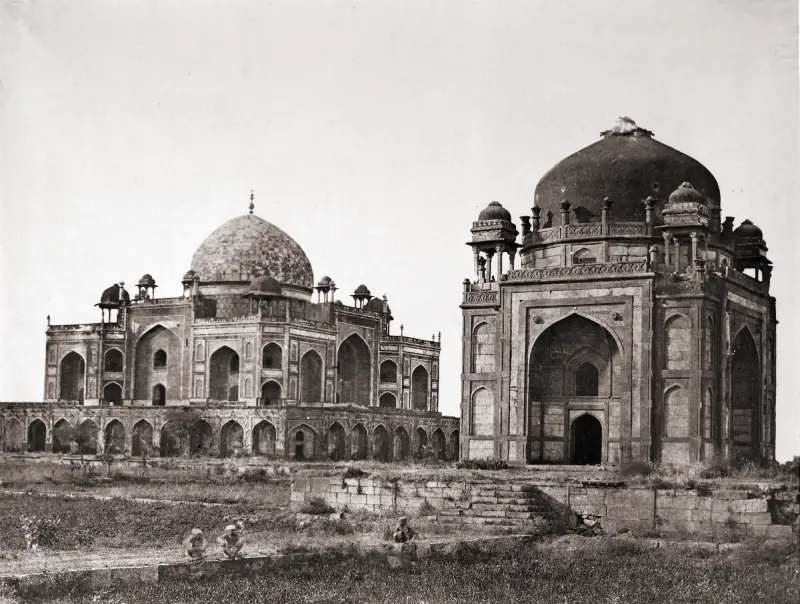
By John Murray, – http://www.bl.uk/onlinegallery/onlineex/apac/photocoll/h/019pho000000052u00017000.html, Public Domain, Link
After Humayun’s unexpected death in 1556 (he fell down a staircase, no joke), his wife Empress Bega Begum went all out. She summoned Persian architect Mirak Mirza Ghiyas, and together they created a mausoleum fit for royalty. It was the first Indian monument to rock the Persian-style double dome and massive Charbagh gardens. The tomb even influenced the design of—you guessed it—the Taj Mahal.
What makes it cooler? The architecture. The symmetrical floor plan, lattice marble windows (jaalis), red sandstone walls, white marble inlays, and that soaring 47-meter dome—Humayun’s Tomb is a masterclass in Indo-Islamic design.
Over time, the site became the final resting place for more Mughal emperors and nobles, including Dara Shikoh (the eldest son of Shah Jahan), Empress Hamida Banu Begum, and even the last emperor, Bahadur Shah Zafar, who was captured here during the 1857 Rebellion.
Don’t Miss These Highlights
- The central tomb with its huge double dome
- Charbagh garden layout, perfect for a chill stroll or photo op
- Isa Khan’s tomb—older than Humayun’s and packed with detail
- The quiet inner chambers and underground crypts
- Historical plaques and restoration info around the complex
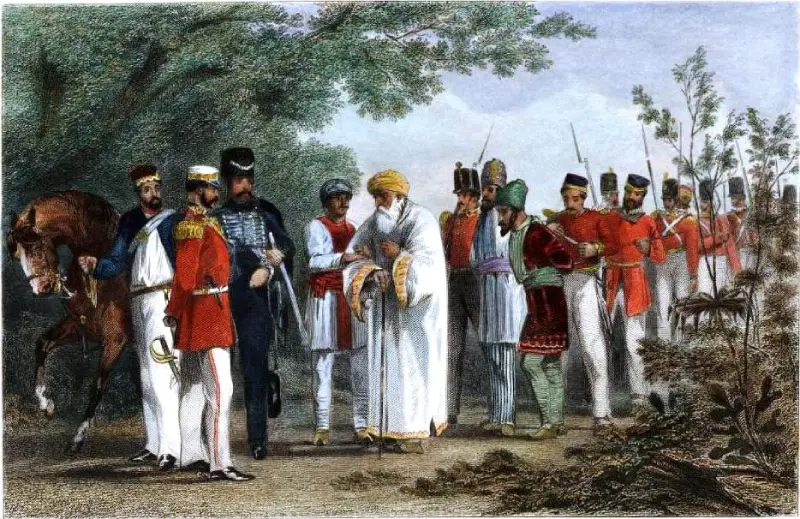
By Robert Montgomery Martin – A print from THE INDIAN EMPIRE by R. Montgomery MARTIN – Published in London and New York. c. 1860http://www.asiafinest.com/forum/lofiversion/index.php/t119636.html, Public Domain, Link
How to Reach
Getting to Humayun’s Tomb is a breeze, whether you’re backpacking across India or rolling in from your Delhi hotel.
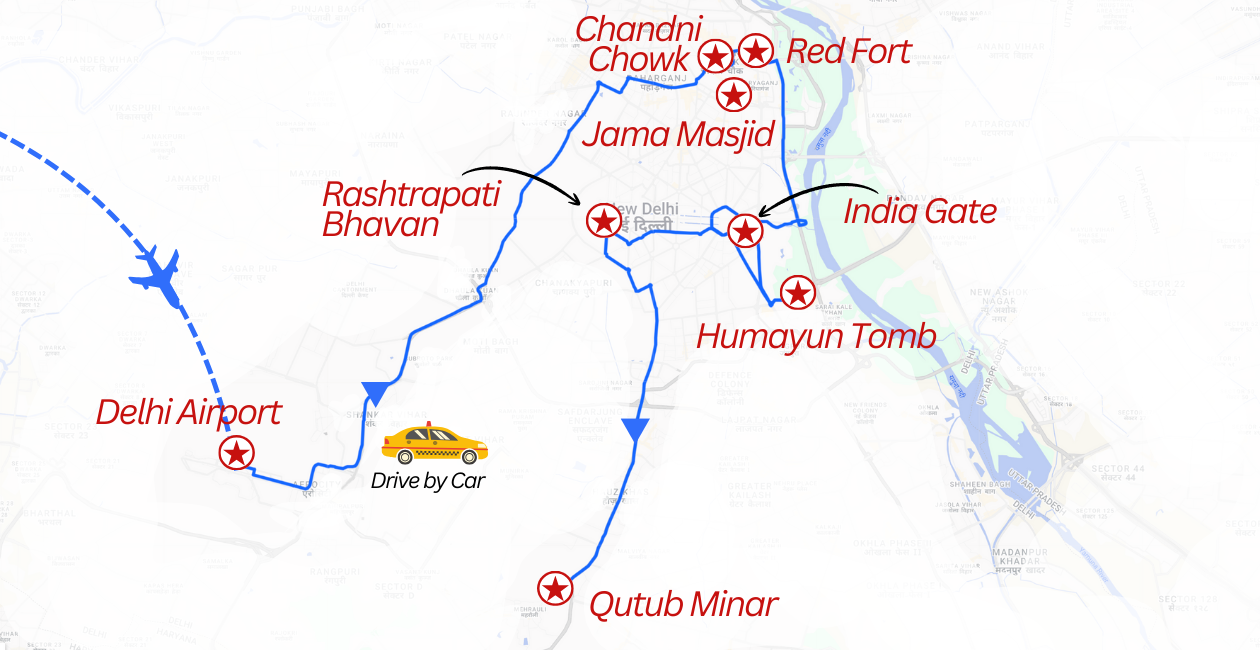
By Air: Flying in from the States? You’ll land at Indira Gandhi International Airport (DEL), about 45 minutes away from the tomb via cab or Uber.
By Train: If you’re rail-hopping India, the nearest major station is Hazrat Nizamuddin Railway Station—just a 10-minute cab or rickshaw ride away.
By Road: Humayun’s Tomb is centrally located in Nizamuddin East, South Delhi. If you’re coming from Connaught Place or India Gate, it’s around a 20-minute drive. Pro tip: Uber and Ola work great in Delhi.
By Metro: Hop on the Delhi Metro’s Violet Line and get off at JLN Stadium station. From there, it’s a short rickshaw or 15-minute walk.