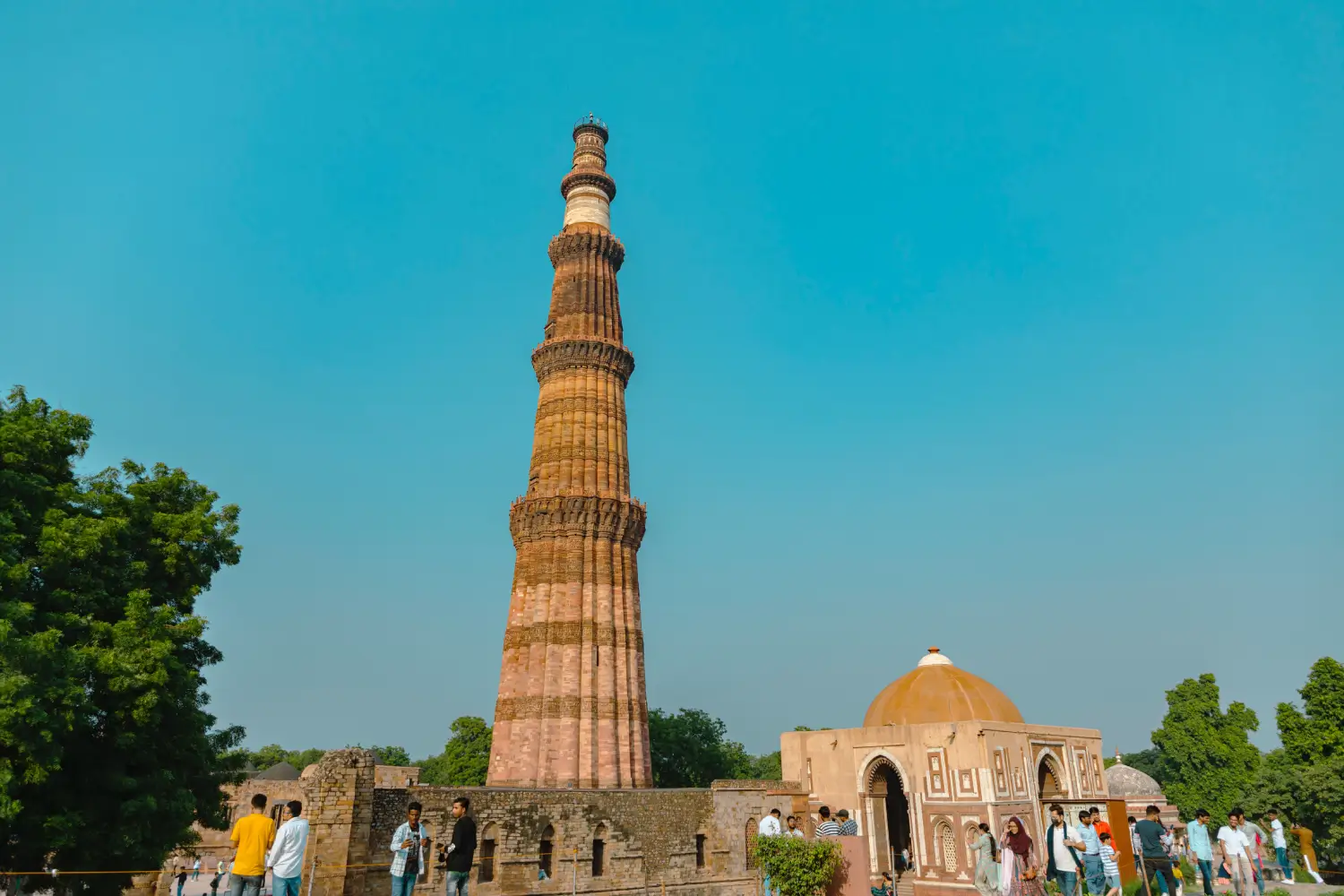
Looking for a jaw-dropping historical landmark to add to your India itinerary? Say hello to Qutub Minar—a towering marvel rising out of South Delhi that tells a fascinating story of conquests, culture mashups, and jaw-dropping architecture. Standing tall at 72.5 meters (that’s nearly 240 feet), the Qutub Minar is the world’s tallest brick minaret and one of the most visited UNESCO World Heritage Sites in India.
But don’t think it’s just a big old tower. The Qutub Complex is a full-on historical playground packed with ruins, mosques, tombs, and ancient secrets waiting to be uncovered.
Why You Should Care About Qutub Minar
This ain’t just a tall tower—it’s history carved in stone. The Qutub Minar was started in 1199 AD by Qutb al-Din Aibak, the guy who kicked off Muslim rule in Delhi after defeating the last Hindu king of the region. While Aibak only finished the first level, his successors took the job seriously. By 1368, the minaret had five stories, decked out in red sandstone and marble, featuring intricate carvings, calligraphy, and balconies you can’t climb anymore (more on that later).
Its design? A fluted tower with five tapering stories, each separated by projecting balconies supported by detailed stone brackets that resemble honeycombs or stalactites—totally Insta-worthy even before Instagram was a thing.
Highlights of the Qutub Complex
Qutub Minar Itself
- Height: 72.5 meters (238 feet)
- Material: Red sandstone + white marble
- Architecture: Islamic meets Indic—think Arabic calligraphy next to Hindu temple motifs
- Fun Fact: It has 399 steps inside, but public access is closed after a tragic stampede in 1981.
Quwwat-ul-Islam Mosque
- Built in 1198 AD, it’s the first mosque in India.
- Made using remains of 27 demolished Hindu and Jain temples—a bold and controversial architectural mashup.
- The mosque’s arched screens and reused temple columns make it a rare fusion of Islamic and Hindu architecture.
Iron Pillar of Delhi
- Dates back to the 4th century AD (Gupta Period).
- Despite being 1600+ years old and exposed to the elements, it hasn’t rusted—modern scientists are still geeking out about how that’s possible.
- Carved with Sanskrit inscriptions, it honors a king named Chandra, likely Chandragupta II.
Alai Darwaza
- A stunning red sandstone and marble southern gateway, built in 1311 by Alauddin Khalji.
- Famous for true Islamic domes and arches—a big architectural leap for Indian monuments.
Tomb of Iltutmish
- The final resting place of Aibak’s son-in-law and successor.
- Built in 1235 AD, this tomb showcases elaborate carvings that blend Islamic and Indian elements.
Alai Minar (The Unfinished Tower)
- Alauddin Khalji wanted to build a minar twice the size of Qutub Minar.
- He didn’t get very far—just one huge base and partial story exist today.
Smith’s Folly
- A quirky piece of colonial-era “restoration.” In the 1800s, British officer Robert Smith added a dome to the top of the Minar, which looked totally out of place. It was removed and now sits in the garden—dubbed “Smith’s Folly.”
A Bit of History: The Ghurids & Cultural Synthesis
The Qutub Minar is a symbol of Ghurid power—a dynasty of Tajik origin from Afghanistan that brought Islam to northern India. Rather than wiping the slate clean, these newcomers embraced a blend of Islamic and Indic styles, employing Hindu artisans and Muslim architects. That’s why the Qutub Minar doesn’t look like anything you’d find in the Middle East—it’s a fusion monument, stitched together by diverse cultural threads.
How to Reach
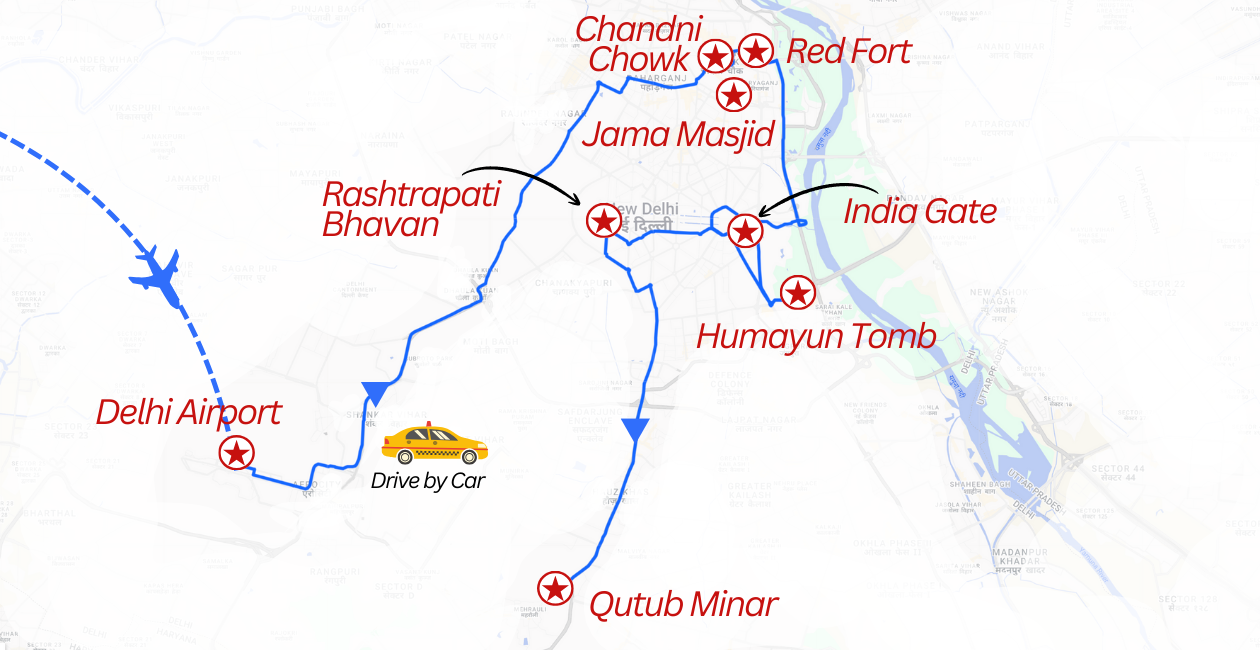
Coming from the U.S.? You’ll first land in Indira Gandhi International Airport (DEL) in New Delhi.
By Metro: Hop on the Yellow Line and get off at Qutub Minar Metro Station. From there, it’s a 10-minute walk or quick rickshaw ride.
By Taxi/Ola/Uber: Super easy—just plug in “Qutub Minar” and you’re golden. It’s located in Mehrauli, South Delhi, and is well-connected by road.
By Tour Bus: Tons of city tours stop here as it’s a must-see. If you’re short on time, consider a half-day heritage tour.