Rashtrapati Bhavan (Hindi for “Presidential Palace”) is the official residence of the President of India and one of the most awe-inspiring landmarks in the heart of New Delhi. With its mind-blowing scale, rich history, and architectural grandeur, this massive estate is more than just a residence — it’s a living symbol of India’s democratic spirit and cultural fusion. If you’re visiting India from the U.S., this iconic building is an absolute must-see.
A Quick Look Back: From Viceroy’s House to Presidential Palace
Back in the day when India was under British rule, the capital was moved from Calcutta to Delhi in 1911. This called for a new, grand residence for the British Viceroy — and the result was the Viceroy’s House, built over 17 years (1912–1929). Designed by legendary British architect Sir Edwin Lutyens, this place was meant to scream power, class, and colonial authority.
After India gained independence in 1947, the building was renamed Rashtrapati Bhavan and became the official residence of the President of India. The very first Indian to live there was C. Rajagopalachari, who kept it simple by using only a few rooms. Today, it’s the full-time residence and workplace of the President and a place where India’s top ceremonies and diplomatic events go down.
Architectural Grandeur: A Blend of East and West
Let’s talk design — because Rashtrapati Bhavan is an architectural beast.
- Four floors, 340 rooms, and over 2.5 km of corridors make up this H-shaped mega mansion.
- The central dome, inspired by the ancient Buddhist stupa at Sanchi, is a showstopper. It rises 180 feet, giving the whole building an instantly recognizable silhouette.
- Materials include pink and cream sandstone from Rajasthan, as well as millions (yes, millions) of bricks and stones, with minimal steel used — a true old-school build.
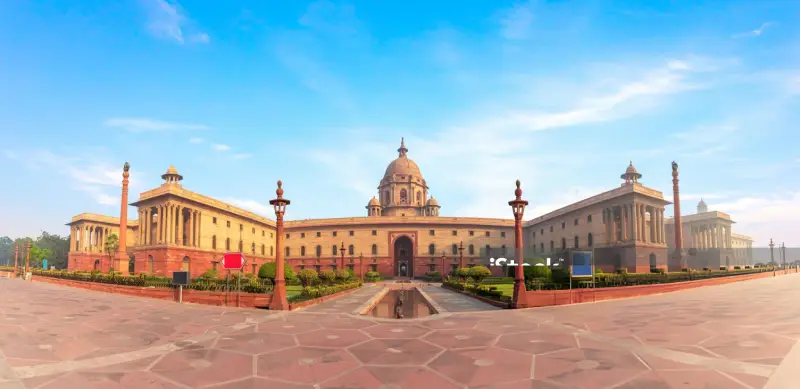
Lutyens blended classical European style with Indian elements, such as chhajjas (sunshades), chhatris (dome-like pavilions), Mughal-style gardens, and pierced sandstone screens called jalis. The result is an Indo-European fusion that’s both stately and deeply rooted in Indian heritage.
Inside the Palace: Highlights You’ll Want to See
If you get the chance to tour the interior, here’s what not to miss:
- Ganatantra Mandap (formerly Durbar Hall) – The centerpiece under the dome, where India’s presidents, prime ministers, and justices are sworn in. It features towering white marble columns, a massive glass chandelier, and a serene 5th-century Buddha statue.
- Ashok Mandap (formerly Ashok Hall) – Once a royal ballroom, now used for formal events. It’s decked out with massive chandeliers, Persian-style decor, and murals that take you back in time.
- Banquet Hall – Where state dinners happen in serious style.
- Library – A treasure trove of books and rare manuscripts.
- Forecourt – The ceremonial front area with the striking Jaipur Column, gifted by the Maharaja of Jaipur, standing 145 feet tall.
How to Reach Rashtrapati Bhavan
From the USA:
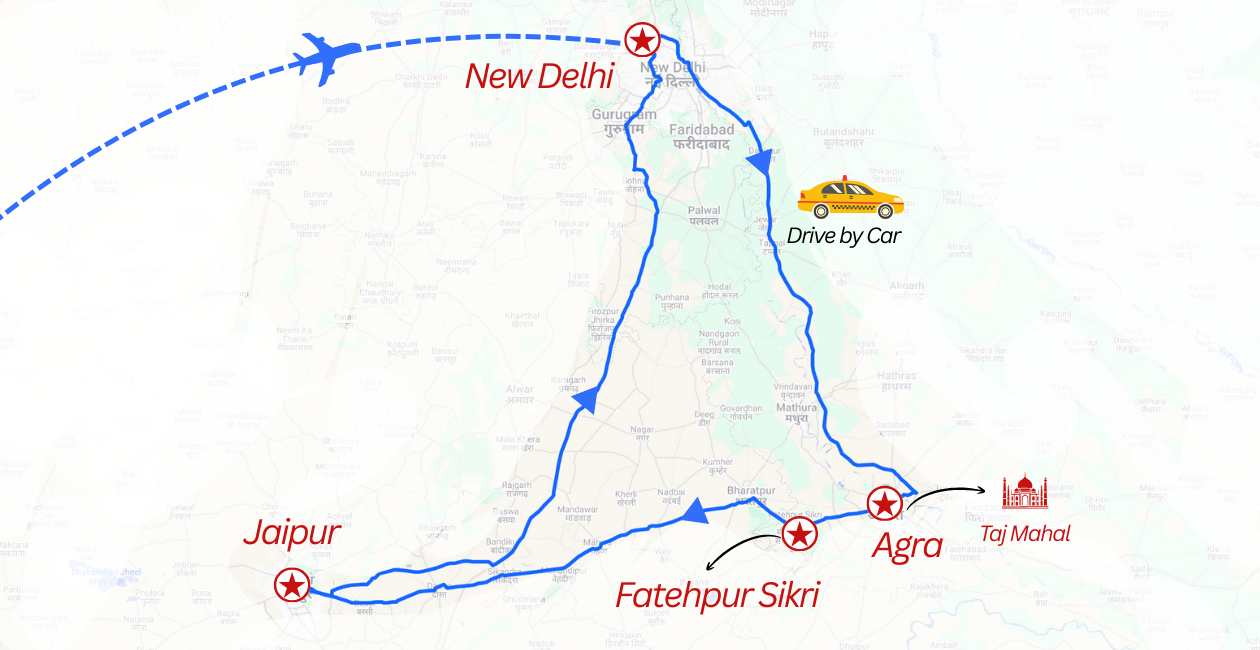
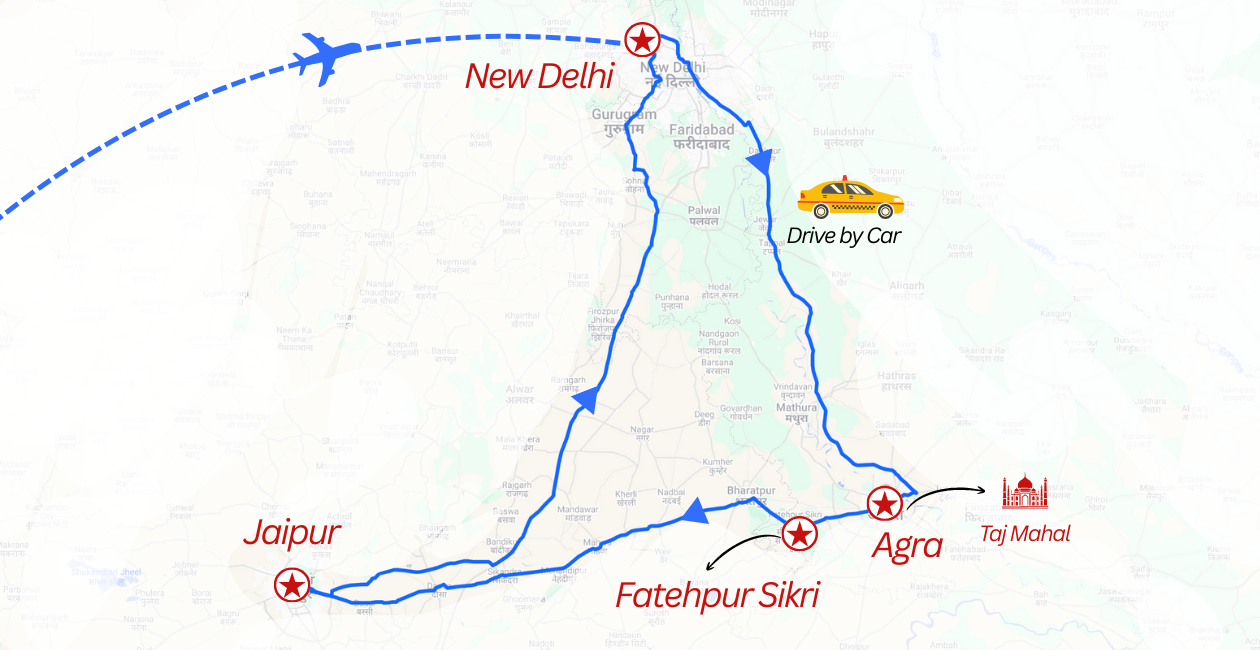
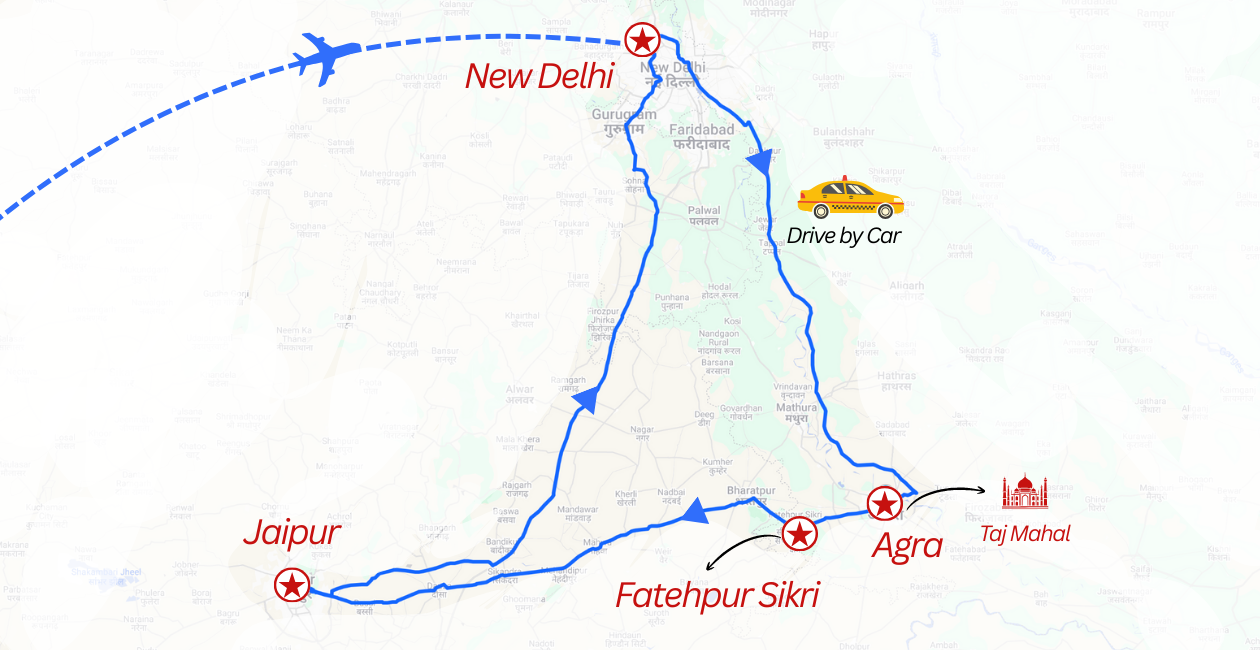
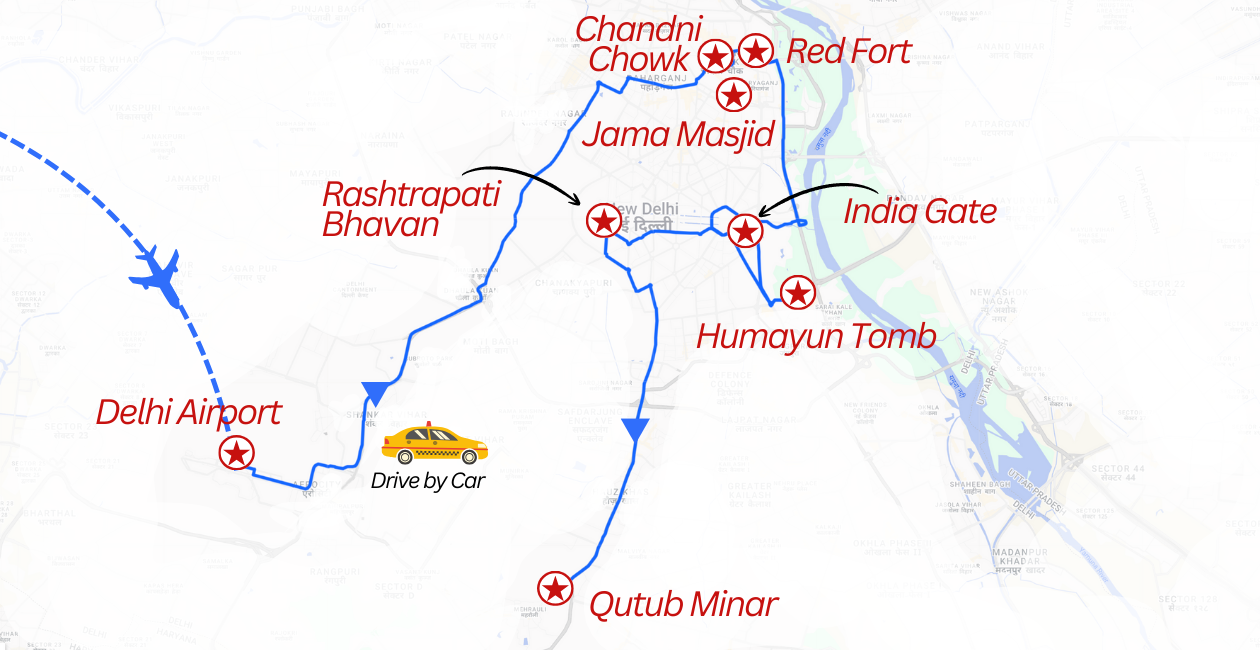
- Book a flight to Indira Gandhi International Airport (DEL), New Delhi. Major U.S. cities like New York, San Francisco, Chicago, and Washington D.C. offer direct or one-stop flights.
From Within Delhi:
- Metro: Take the Delhi Metro Yellow Line and get off at Central Secretariat station. Rashtrapati Bhavan is a short cab or rickshaw ride from there.
- Cab/Auto: Use Uber, Ola, or local taxis/rickshaws for convenient and cheap access.
- By Car: Rashtrapati Bhavan is centrally located and easily reachable via major roads like Rajpath.
???? Address: Rashtrapati Bhavan, President’s Estate, New Delhi – 110004, India