Welcome to the heart of India’s historic soul—The Red Fort, or Lal Qila, a massive red sandstone fortress that has witnessed the rise and fall of empires, the sparkle of Mughal grandeur, and the triumph of Indian independence. Located in Old Delhi, this UNESCO World Heritage Site is more than just a landmark—it’s a living legacy of India’s past, deeply woven into the nation’s identity.
If you’re planning your dream trip to India, the Red Fort should be right up there on your must-see list. Here’s why.
A Walk Through Time: The History of the Red Fort
Commissioned in 1639 by Emperor Shah Jahan—yep, the same guy who built the Taj Mahal—the Red Fort was designed to be the crown jewel of the new Mughal capital, Shahjahanabad (now Old Delhi). Completed in 1648, it served as the main residence of the Mughal emperors for nearly two centuries.
Crafted by Ustad Ahmad Lahori, the master architect behind the Taj Mahal, the fort blends Persian, Central Asian, and Indian architectural styles. It originally shimmered in red and white, Shah Jahan’s favorite colors, and featured royal halls, lush gardens, ornate palaces, and intricate water systems.
Over the years, the fort was ransacked—first by Nadir Shah of Persia in 1739, and later by the British after the 1857 Rebellion, when they demolished over 80% of its inner structures. Yet, its towering red sandstone walls endured—and today, they symbolize resilience, strength, and independence.
On August 15, 1947, India’s first Prime Minister Jawaharlal Nehru hoisted the Indian flag here, a ritual now repeated every Independence Day.
What to See Inside the Red Fort
This ain’t just a wall—you’re stepping into history. Some highlights you can’t miss:
- Lahori Gate: The main entrance, where the Indian Prime Minister addresses the nation every Independence Day.
- Chhatta Chowk: A covered bazaar that once sold silks, jewelry, and other luxuries to the royals.
- Naubat Khana (Drum House): Once filled with musicians announcing royal arrivals. Now, it hosts the Indian War Memorial Museum.
- Diwan-i-Am (Hall of Public Audience): Where emperors met commoners and delivered justice.
- Diwan-i-Khas (Hall of Private Audience): The Emperor’s VIP lounge—home to the legendary Peacock Throne (before it was looted). Don’t miss the inscription: “If there is paradise on earth, it is this, it is this, it is this.”
- Rang Mahal: The “Palace of Colors,” once adorned with fountains, ivory, and mosaics. It housed royal women.
- Moti Masjid (Pearl Mosque): A pristine marble mosque built by Emperor Aurangzeb for private prayers.
- Hammam (Royal Baths): Imagine soaking in luxury fit for a king—these baths were tiled, scented, and sophisticated.
- Hayat Bakhsh Bagh: The “Life-Bestowing Garden,” filled with water channels and Mughal-style landscaping.
- Shahi Burj: Shah Jahan’s favorite workspace, overlooking the river and palace.
How to Reach the Red Fort
Coming from the US? Here’s your guide to getting there smoothly.
- Fly into Indira Gandhi International Airport (DEL), New Delhi
- Book a direct or one-stop flight from major US cities like New York, Chicago, or San Francisco.
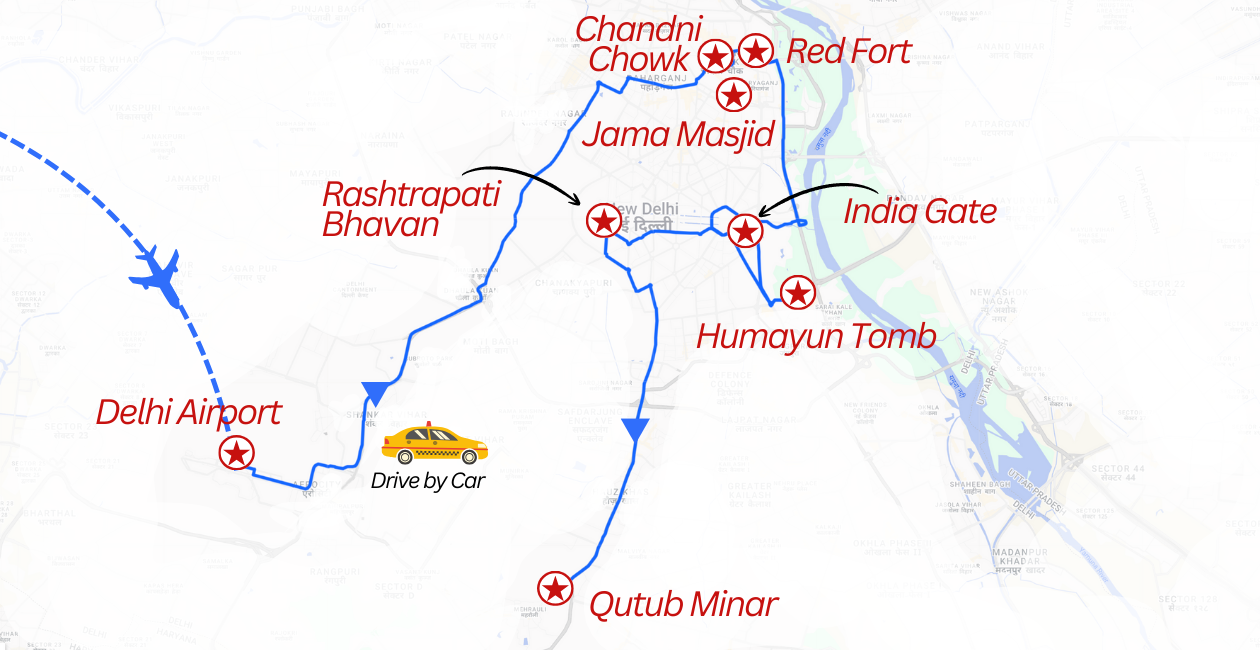
- Metro: Take the Yellow Line to Chandni Chowk Station or the Violet Line to Delhi Gate Station. Both stations are a short walk or rickshaw ride from the fort.
- Cab/Auto-Rickshaw: Uber and Ola are available in Delhi and offer reliable transport.
- Private Tour: Book a day tour that includes hotel pickup, guided visit, and drop-off. Totally worth it if you want to skip the hassle.
Final Thought
The Red Fort isn’t just another historic site—it’s a portal into India’s imperial past and its revolutionary spirit. Whether you’re a history nerd, architecture buff, culture junkie, or just someone looking to be awed, this place will leave a lasting impression.
From the echo of royal footsteps to the modern-day sounds of freedom ringing from its ramparts, the Red Fort is where India’s story comes to life.