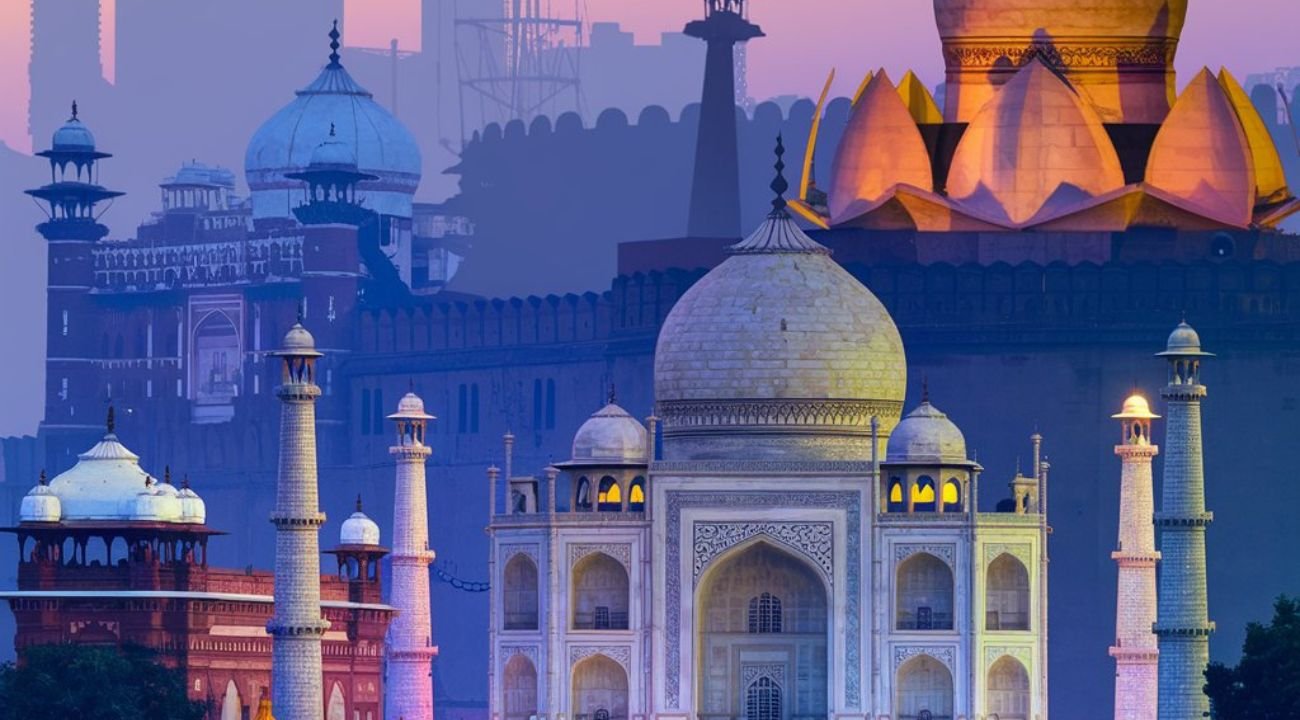
If there’s one bucket-list monument in the world that lives up to the hype, it’s the Taj Mahal. Nestled on the banks of the Yamuna River in Agra, Uttar Pradesh, India, this breathtaking ivory-white marble mausoleum is more than just a pretty face—it’s a timeless symbol of love, loss, and legacy. Commissioned in 1631 by Mughal emperor Shah Jahan for his beloved wife Mumtaz Mahal, the Taj Mahal is basically the world’s most extravagant “I miss you” gift.
From its perfect symmetry and detailed inlay work to its epic love story, this global icon draws over five million visitors each year and was crowned one of the New 7 Wonders of the World in 2007. Whether you’re into architecture, history, photography, or just chasing beauty, the Taj is a can’t-miss stop in India.
A Love Story Carved in Stone
Imagine losing the love of your life and deciding to build the most beautiful monument ever in her memory. That’s what Shah Jahan did when Mumtaz Mahal died in 1631 during childbirth. Crushed with grief, the emperor promised to honor her with something no one could ever forget. And boy, did he deliver.
The Taj Mahal isn’t just a tomb—it’s a monument that captures the depth of human emotion in stone and marble. Both Mumtaz and Shah Jahan are buried here, their tombs located in a quiet underground crypt, while elegant cenotaphs lie above in the main chamber for visitors to admire.
Building the Dream: Construction & Scale
Construction began in 1632 and wrapped up by 1653, with over 20,000 artisans and craftsmen brought in from across the Mughal Empire and Central Asia. Over 1,000 elephants helped haul in materials, including precious stones and that now-famous Makrana white marble from Rajasthan.
The Taj Mahal is the centerpiece of a massive 42-acre complex that includes a mosque, a guesthouse, lush gardens, and several gates—each more impressive than the last.
Jaw-Dropping Architecture
The Taj Mahal is a masterpiece of Mughal architecture, blending Persian, Islamic, and Indian influences. Some of the features that’ll leave you speechless include:
- White Marble Brilliance: The entire structure is made from glowing Makrana marble that changes color throughout the day—pinkish at dawn, dazzling white at noon, golden under the moonlight.
- Perfect Symmetry: Every element of the complex—from the fountains to the flanking structures—is perfectly aligned. Even the tombs are symmetrical except for Shah Jahan’s, which was added later.
- Massive Central Dome: At the heart of the mausoleum is a majestic double dome that rises over 240 feet high.
- Four Leaning Minarets: The tall, slim towers surrounding the tomb are angled slightly outward—so in case of an earthquake, they’d fall away from the main building.
- Incredible Inlay Work (Pietra Dura): Thousands of semi-precious stones like lapis lazuli, jade, turquoise, and coral are inlaid into the marble to create stunning floral designs and Arabic calligraphy.
- Calligraphy & Carvings: Quranic verses and poetic phrases are etched in perfect symmetry. The script size increases as it goes higher to appear uniform from the ground—a brilliant optical illusion.
The Garden of Paradise
The Taj sits inside a classic Mughal Charbagh (four-part garden) that symbolizes paradise in Islamic tradition. Water channels and pathways divide the garden, giving visitors gorgeous sightlines from every angle. The entire setting is serene, spiritual, and 100% Instagram-worthy.
Iconic Side Structures
- The Mosque: Located on the west side of the Taj, it’s made of red sandstone and used for Friday prayers.
- The Jawab: On the east side, this structure mirrors the mosque for aesthetic balance—although it doesn’t serve a religious purpose.
- Main Gateway: As you step through this giant red sandstone archway, your first glimpse of the Taj is a serious showstopper.
How to Reach
Planning a trip to the Taj Mahal? Here’s how to make it happen:
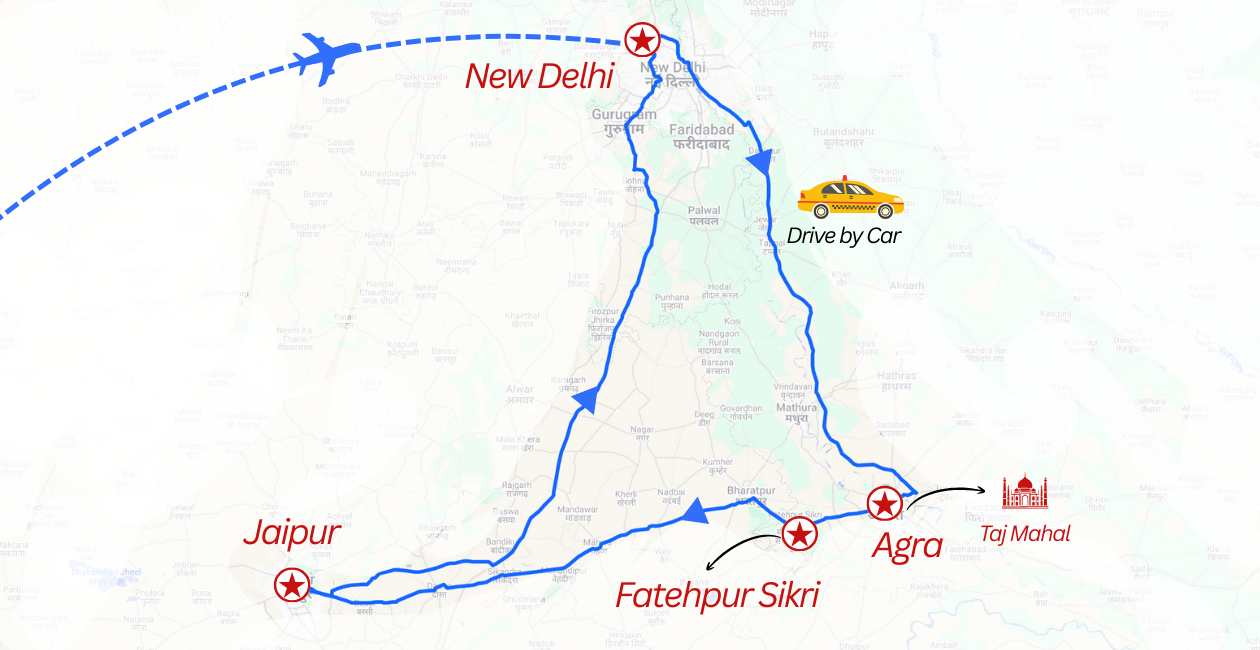
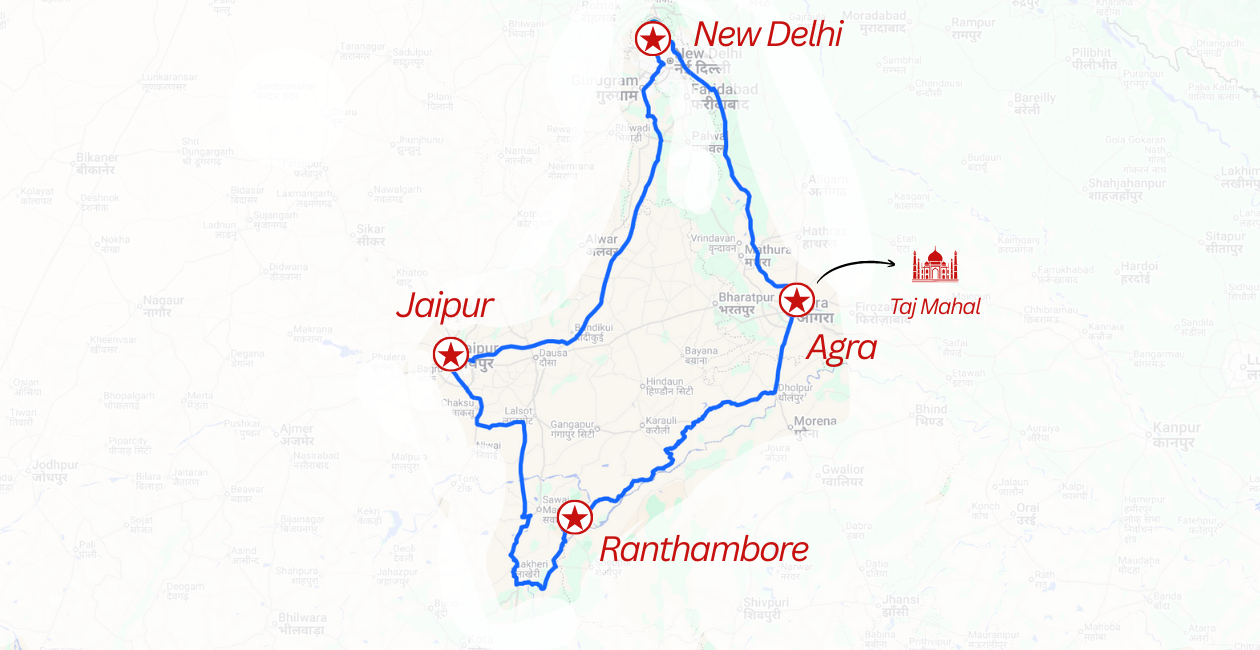
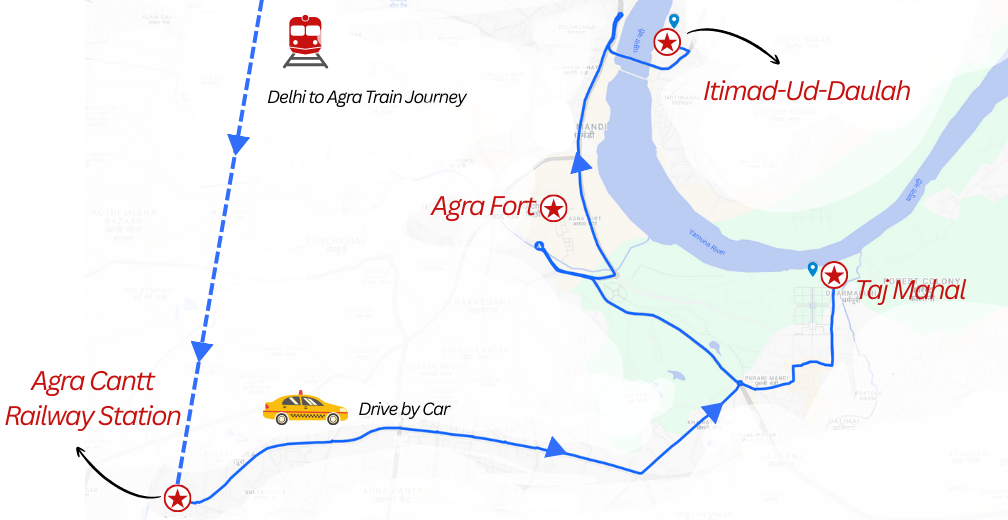
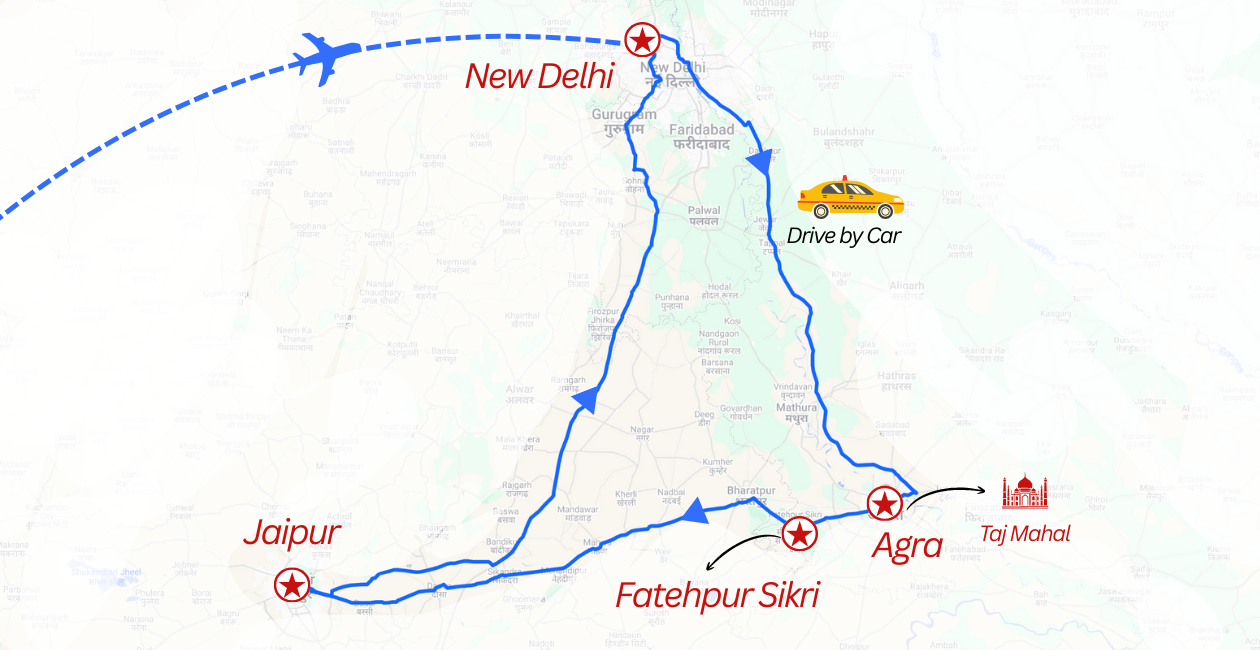
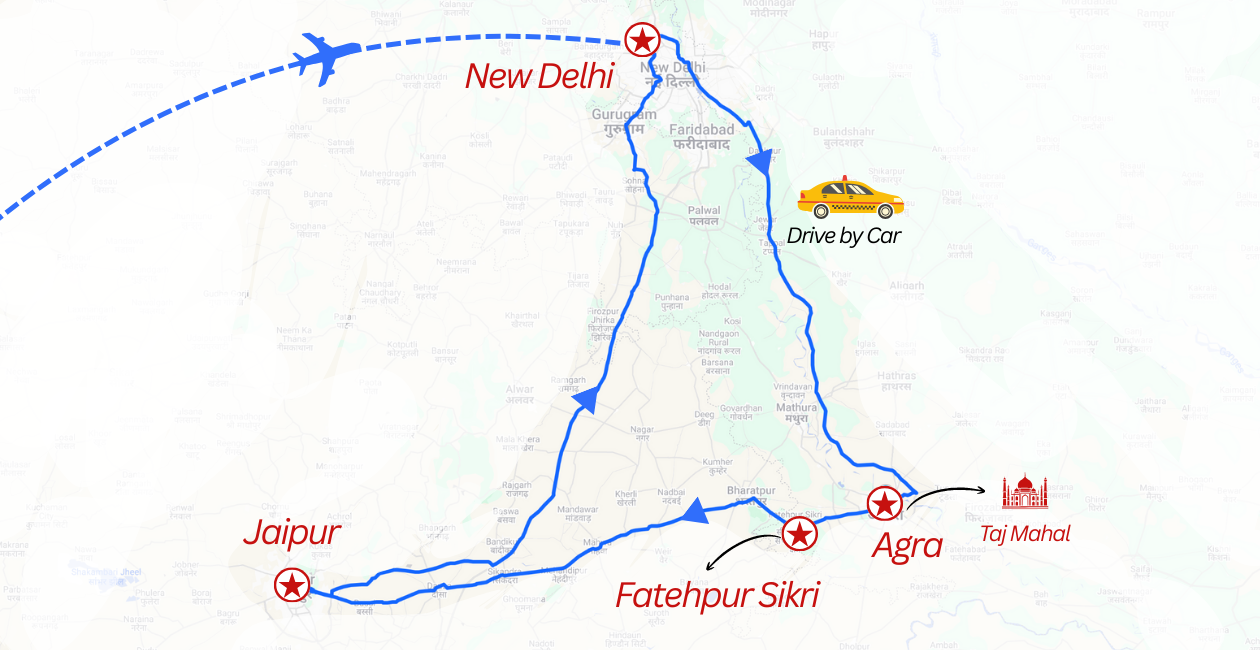
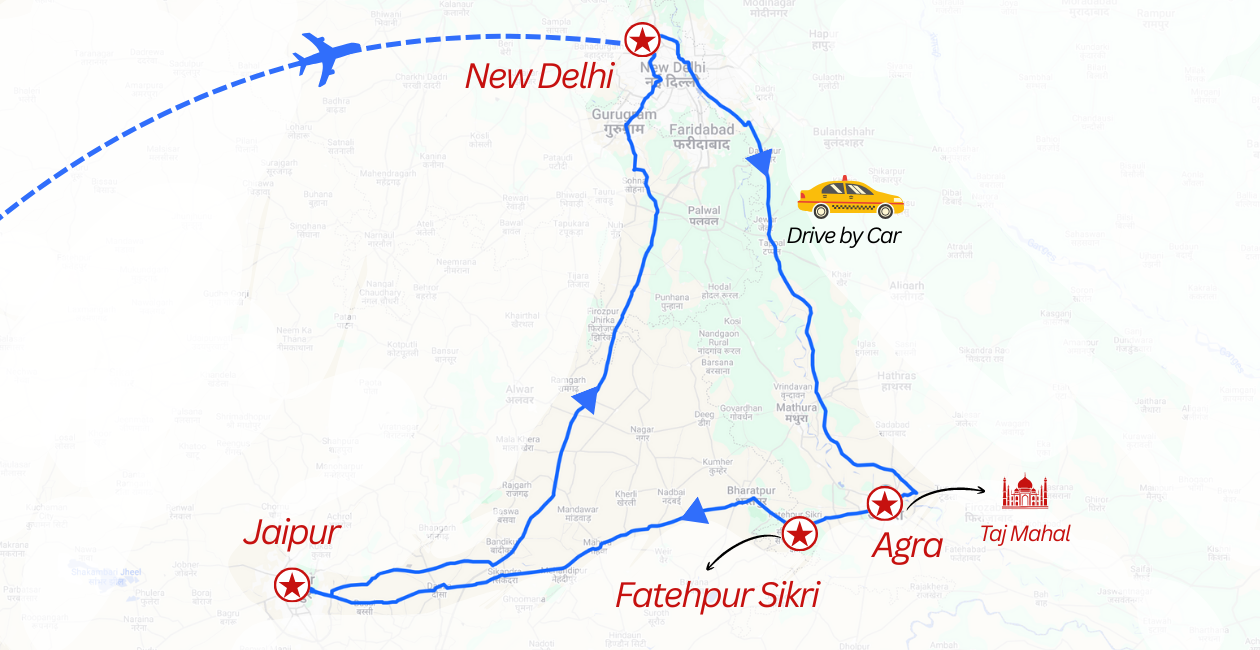
By Train: Agra is super accessible from Delhi, Jaipur, and other major cities. The fastest option is the Gatimaan Express or Shatabdi Express from New Delhi Railway Station—you’ll be in Agra in less than two hours.
By Air: Fly into Indira Gandhi International Airport (DEL) in Delhi, which is about 140 miles from Agra. From there, you can catch a train, hire a private car, or book a bus ride.
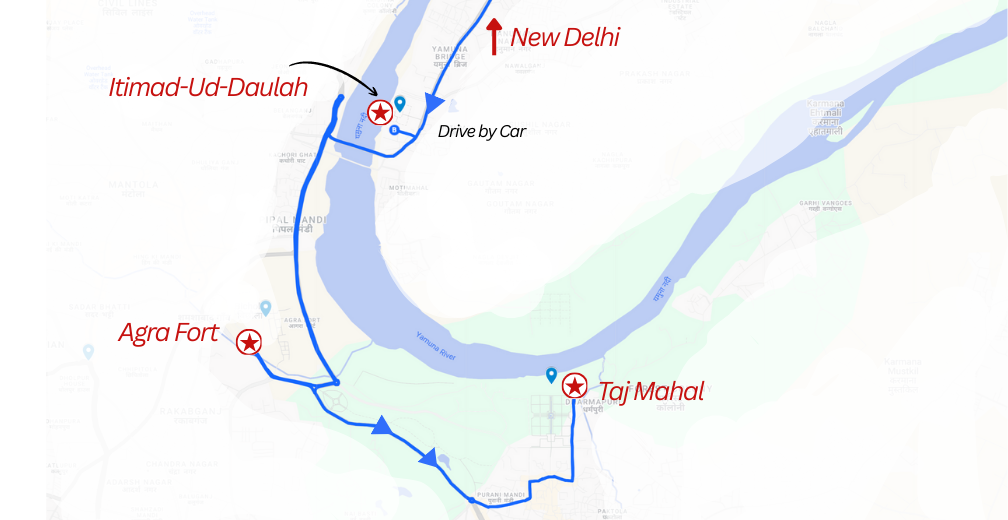
By Car/Taxi: It’s about a 3-4 hour drive from Delhi via the Yamuna Expressway. Rent a car with a driver or use services like Uber Intercity or private tour operators.
By Bus: AC buses run frequently from Delhi’s Sarai Kale Khan ISBT to Agra. It’s budget-friendly but a bit slower.
Location: Dharmapuri, Forest Colony, Tajganj, Agra, Uttar Pradesh 282001