Ranthambore National Park is one of India’s top wildlife destinations, and it’s easy to see why. Nestled in the southeastern corner of Rajasthan, this legendary park is a stunning fusion of rugged natural beauty, ancient ruins, and the unmatched thrill of spotting wild tigers in their natural habitat. For travelers from the U.S. seeking an authentic and exhilarating safari experience, Ranthambore is a must-visit.
Where Nature Meets History
Covering a vast 1,334 square kilometers (about 515 square miles), Ranthambore National Park sits at the crossroads of the Aravalli and Vindhya hill ranges. It’s flanked by two rivers—the Banas to the north and the Chambal to the south—which supply vital water sources for the ecosystem.
What sets Ranthambore apart from other parks is its incredible backdrop: the centuries-old Ranthambore Fort, perched high on a hill overlooking the forest. This 10th-century fortress, now a UNESCO World Heritage Site, adds a surreal medieval flair to your wildlife adventure. The park is peppered with historic ruins, old temples, and crumbling stone palaces—making it feel like you’re on the set of a movie.
The Wild Residents of Ranthambore
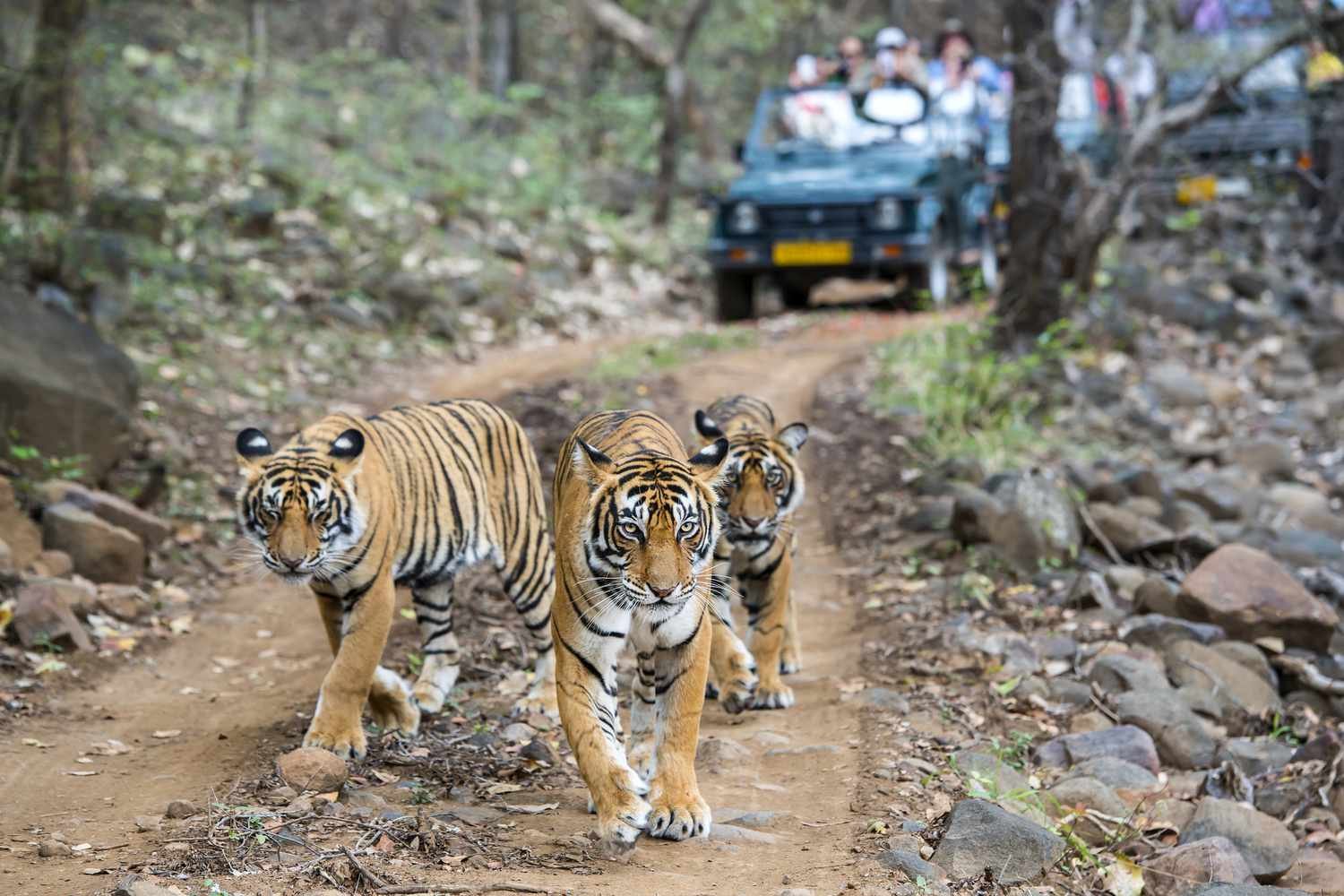
Tigers: Let’s be real—this park is all about the tigers. Ranthambore is one of the best places in the world to see the majestic Royal Bengal Tiger in the wild. And unlike in many other reserves, the tigers here are known for their comfort around humans, making daytime sightings more frequent.
Some tigers, like the legendary tigress Machali (T-16), have become international icons. As of the latest count in 2022, there are about 52 tigers roaming the reserve.
Other Wildlife: Beyond the big cats, the park is teeming with life:
- Leopards (especially in the hilly zones like Kachida Valley)
- Sloth bears
- Sambar deer, spotted deer (chital), nilgai, and chinkara form the primary prey base
- Striped hyenas, jackals, jungle cats, and even caracals (if you’re lucky!)
- Marsh crocodiles, Indian pythons, and monitor lizards
- Birdlife galore: With over 300 species, including Indian paradise flycatchers, crested serpent eagles, painted storks, and peacocks, it’s a birdwatcher’s dream
Nature, Ruins, and Lakes
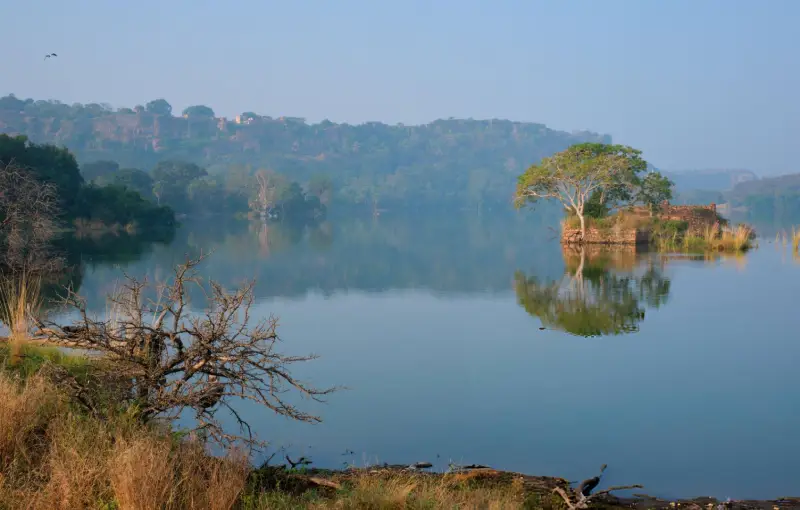
Ranthambore’s landscape is as diverse as its wildlife. You’ll find:
- Dry deciduous forests, mostly dominated by the ‘Dhok’ tree (Anogeissus pendula)
- Grassy meadows and rocky outcrops
- Lakes and water bodies like Padam Talao, Rajbagh Talao, and Malik Talao that act as animal magnets, especially in the dry summer months
And then there’s the architectural goldmine:
- Ranthambore Fort with temples dedicated to Ganesh, Shiva, and Ramlalaji
- Jogi Mahal, a beautiful red sandstone hunting lodge by Padam Talao
- Raj Bagh ruins, stone remnants of old palaces that seem pulled straight from an epic fantasy film
How to Reach
Traveling from the U.S.? Here’s how to get to Ranthambore with minimal fuss:
Step 1: Fly into India
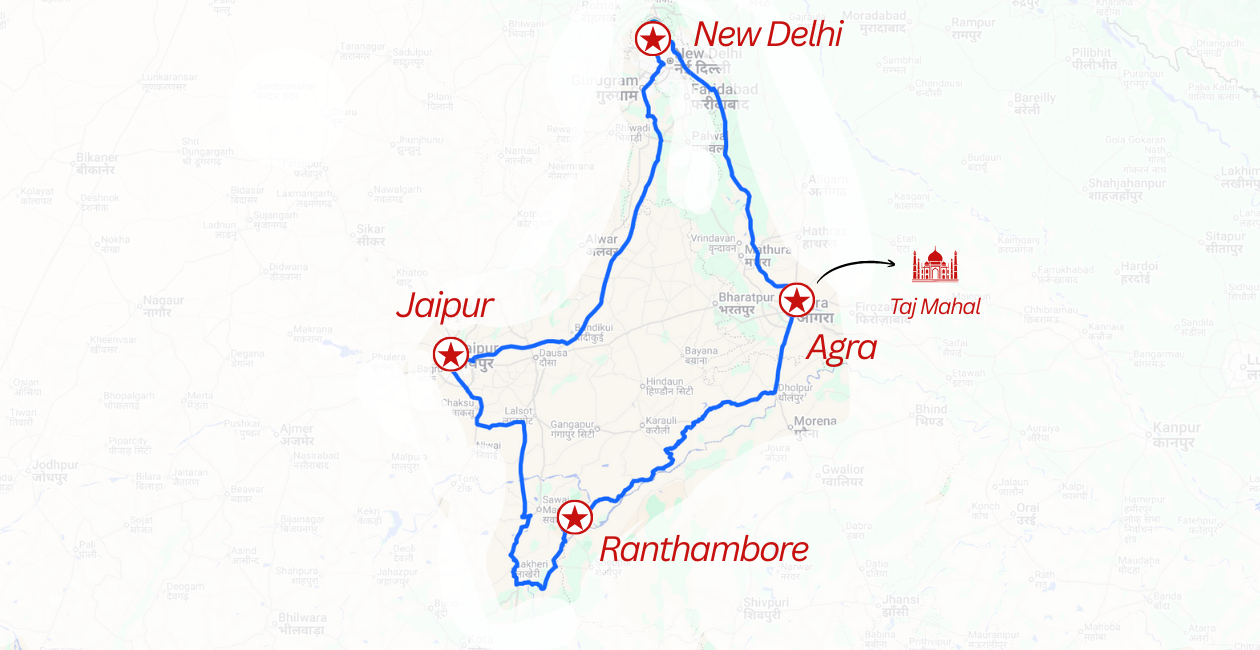
- Your best bet is to fly into Indira Gandhi International Airport (DEL) in New Delhi, which is well-connected to major U.S. cities like New York, San Francisco, Chicago, and Los Angeles.
Step 2: Get to Sawai Madhopur
- By Train: From Delhi, take a train to Sawai Madhopur Railway Station—the gateway to Ranthambore. The journey takes around 5 to 6 hours and there are multiple options, including luxury trains like the Palace on Wheels.
- By Road: Hire a private car or book a cab for a road trip. It’s about a 7–8 hour drive from Delhi and around 3.5–4 hours from Jaipur (the capital of Rajasthan).
- By Air: The nearest airport is in Jaipur (JAI). From there, it’s a scenic 3.5-hour drive to Ranthambore.