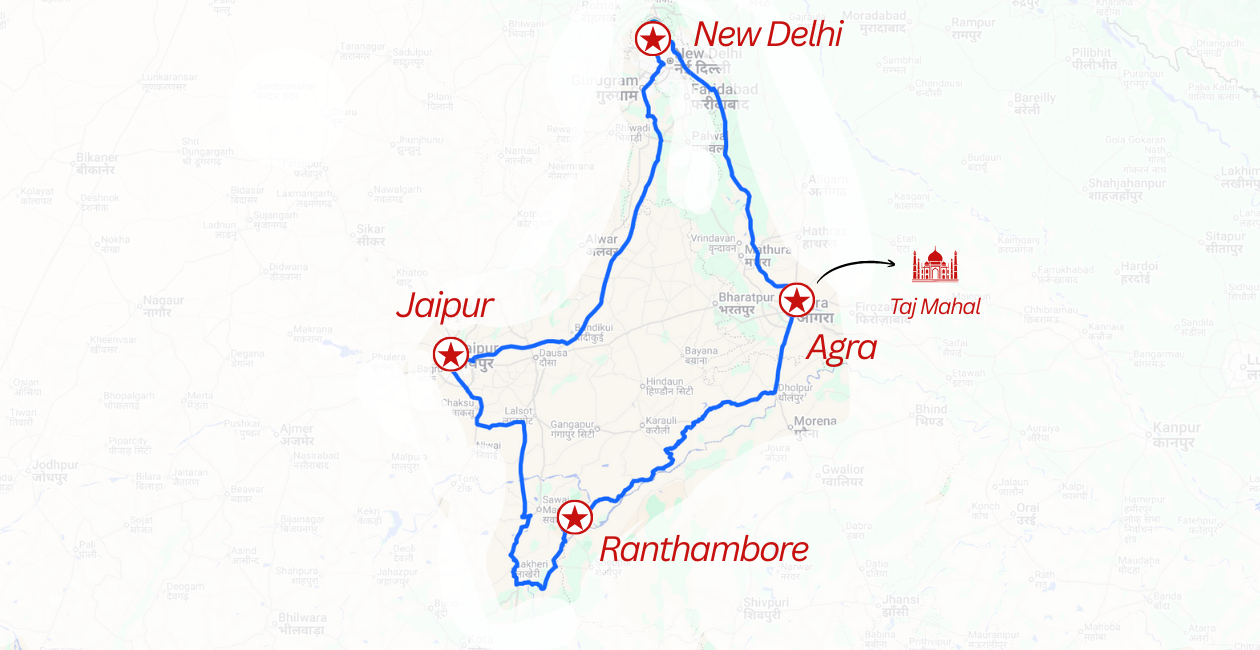
Though the Ranthambore National Park is famous for its mighty Royal Bengal Tiger, there are other amazing flora and fauna to see and discover. To everyone’s surprise, there are more than 530 species of flowering plants along with unique shrubs, and grass in this national park.
Speaking of Fauna, the Ranthambore National Park is home to 40 species of mammals, 35 species of reptiles, and 320 species of birds. Some of the most iconic animals to spot here are – Tigers, Leopards, Indian Foxes, Snub-nosed Marsh Crocodiles, and more.
What’s Flora and Fauna, Anyway?
Let’s break it down real quick. “Flora” is all the plant life in a region — everything from trees and flowers to moss and grass. “Fauna” is all the animals, whether they’re big, small, feathered, or scaly. Together, they make up ecosystems that are as diverse and vibrant as India’s culture.
The Big Picture: Why India’s Biodiversity Rocks
India is ranked among the world’s top 12 mega-biodiverse countries. Here’s why:
- Over 102,000 known animal species and more than 15,000 species of flowering plants
- 23% of the country is covered in forests
- Home to 4 of the world’s 36 biodiversity hotspots: The Himalayas, Western Ghats, Indo-Burma region, and the Nicobar Islands
- 12.6% of the world’s bird species and nearly 9% of all mammals
Thanks to India’s crazy mix of landscapes — think tropical beaches, snow-capped mountains, wetlands, and deserts — every type of plant and animal imaginable calls this place home.
Flora: Nature’s Green Carpet
The flora in India is as diverse as it gets. You’ll find:
- Over 530 species of flowering plants in Ranthambore National Park alone
- Bright orchids and rhododendrons in the Eastern Himalayas
- Dense mangroves in the Sundarbans
- Grasslands across central India
- Evergreen forests in the Western Ghats
Some plants, like the medicinal neem tree and sacred banyan tree, are even part of daily Indian life and ancient Ayurveda healing traditions.
Fauna: Wild Animals That’ll Make Your Jaw Drop
India’s wildlife is the stuff of legends. We’re talking about:
- Royal Bengal Tigers in Ranthambore and Sundarbans
- Asiatic Lions in Gir National Park
- Asian Elephants wandering through the forests of Kerala and Karnataka
- Indian Rhinos chillin’ in Kaziranga
- Snow Leopards stalking the heights of the Himalayas
And that’s just the big guys. India’s got wild dogs (called dholes), sloth bears, leopards, and even the elusive red panda in the northeast. Bird nerds, don’t worry — you’ve got over 1,300 species of birds to spot, from peacocks to hornbills to flamingos.
Ranthambore: A Wildlife Superstar
f there’s one place that packs a punch when it comes to spotting both flora and fauna, it’s Ranthambore National Park in Rajasthan.
- Home to: Bengal tigers, leopards, marsh crocodiles, and more
- Plant life: Over 530 species of flowering plants
- Don’t miss: A tiger safari through ancient ruins overtaken by vines and jungle — it’s like real-life Jungle Book vibes
How to Reach India for a Nature-Focused Trip
Flying In: Major airports like Delhi (DEL), Mumbai (BOM), and Bangalore (BLR) have direct flights from cities like New York, Chicago, L.A., and San Francisco. Book early for the best deals!
Getting Around: India’s train system is wild — in a good way! It’s affordable, scenic, and reaches even remote wildlife parks. You can also hire a driver or hop short domestic flights to save time.
Local Travel: Tuk-tuks and taxis are everywhere. For safaris or national parks, book through licensed tour companies to stay safe and legal.