Tucked deep inside Ranthambore National Park in Rajasthan, India, Ranthambore Fort is where epic battles, royal grandeur, and raw nature collide. Sitting atop a rugged hill, this ancient fortress isn’t just another historical monument—it’s a living, breathing relic surrounded by lush jungle, home to tigers, temples, and timeless tales. For travelers looking to combine culture with adventure, Ranthambore Fort is a bucket-list-worthy destination.

A Glimpse into the Past: A Fortress of Legends
Ranthambore Fort dates back as early as the 5th century, with much of its known history shaped by the Chauhan dynasty in the 10th century. Built to dominate trade routes and defend against invaders, the fort’s location—700 feet above the plains—made it virtually untouchable. Over centuries, it became a hot prize in India’s game of thrones, changing hands between the Chauhans, Delhi Sultans, Mughals, Mewar rulers, and eventually the Jaipur royal family.
One of the most dramatic episodes in its history was the siege by Alauddin Khalji in 1301 AD, ending in a fierce battle and a tragic act of jauhar, where royal women, led by Queen Rangadevi, chose death over dishonor. This tale of sacrifice has echoed through generations, adding layers of romance and sorrow to the fort’s walls.
By the 18th century, the Jaipur royals turned the surrounding forest into their private hunting grounds. Later, this wilderness was preserved and became the Ranthambore National Park we know today.
The Architecture: Raw, Rugged, and Regal
Ranthambore Fort isn’t just big—it’s colossal. The massive stone walls, seven heavy-duty gateways, and ancient defense systems were built to withstand the toughest enemies. Walking through the fort today feels like stepping into a medieval fortress with a serious edge.
Here’s what not to miss:
- Trinetra Ganesh Temple: One of the fort’s biggest draws, this temple is dedicated to Lord Ganesha and is one-of-a-kind with its three-eyed idol. Devotees from all over India send wedding invites here, believing the deity’s blessings are essential.
- Jogi Mahal: Overlooking Padam Talao (Ranthambore’s largest lake), this historic guesthouse was once a royal hunting lodge. It’s not open for overnight stays, but its scenic vibes are a photo-op dream.
- Battis Khamba Chhatri (32-Pillared Cenotaph): This stunning structure shows off classic Rajput architecture and offers a quiet space to soak in the views.
- Hammir Court and Royal Palaces: These ruins—especially Hammir Badi Kachahari and Badal Mahal—tell tales of royal courts, drama, and strategy.
- Temples and Shrines: There are ancient shrines for Shiva, Ramlalaji, and Jain deities like Lord Sumatinath and Lord Sambhavanath. The blend of faiths is a testimony to the fort’s inclusive past.
Nature Meets History
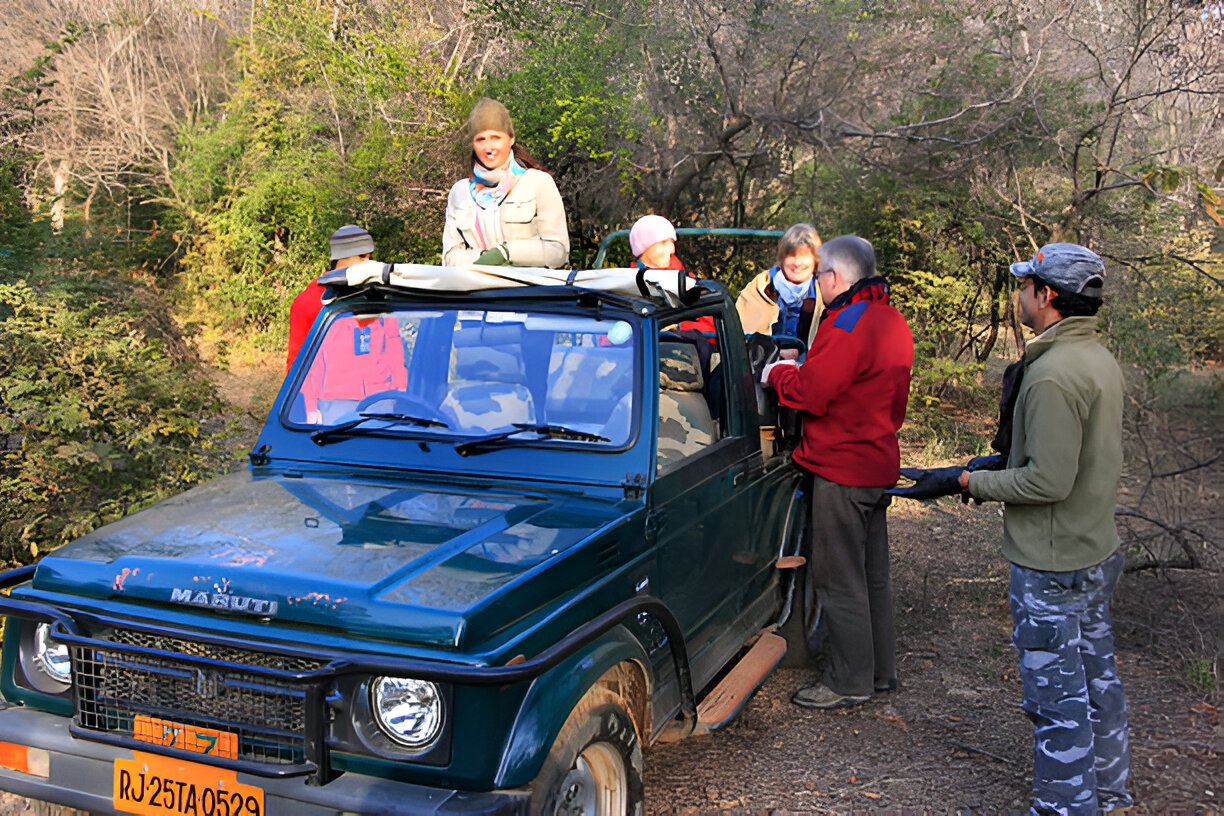
What makes Ranthambore Fort truly next-level is its wild surroundings. It’s the only fort in India that shares its backyard with a national park full of tigers, leopards, sloth bears, and more. From the fort’s ramparts, you get jaw-dropping views of Padam Talao, Malik Talao, and the sprawling forests below—ideal for snapping photos or spotting wildlife.
Inside the fort, don’t be surprised if you see langurs swinging through the trees or peacocks strutting past temple steps. The vibe here is a surreal mix of sacred silence and jungle calls.
How to Reach
Getting to Ranthambore Fort is pretty straightforward, even if you’re flying in from the States.
By Air
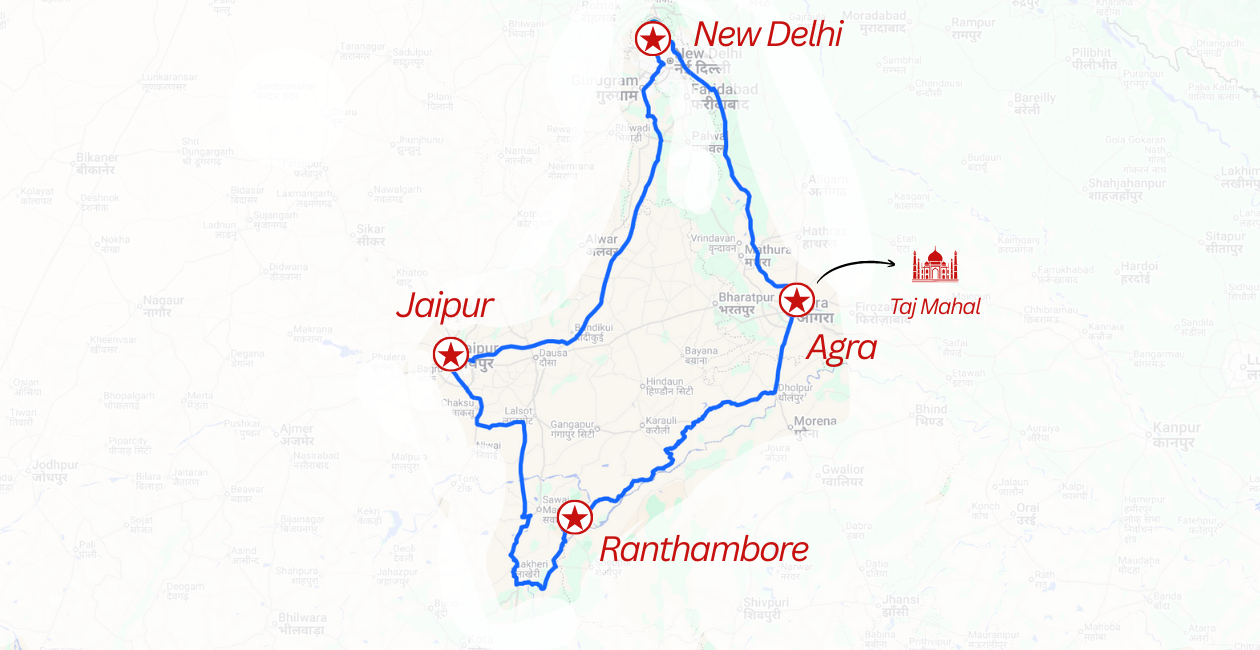
- Closest Airport: Jaipur International Airport (JAI), about 100 miles (160 km) from the fort.
- From Jaipur, you can catch a train, hire a private cab, or book a group tour to Sawai Madhopur.
By Train
- Sawai Madhopur Railway Station (SWM) is the main rail hub and is well-connected to major Indian cities like Delhi, Mumbai, and Jaipur.
- From the station, it’s about a 15-20 minute drive to the park entrance.
By Road
- You can drive or hire a car from Jaipur (3-4 hours), Delhi (7-8 hours), or Agra (6 hours). The roads are decent, and the journey itself is a scenic ride through rural Rajasthan.
Local Access
- The fort is located inside Ranthambore National Park, and you’ll need to park near the base and hike up a short trail (around 20–30 minutes). The path is safe and well-worn, but wear good shoes—there are stairs and uneven surfaces.